

23 Jan Daily denture care - how to keep your dentures comfortable and hygienic
Dentures require daily, conscious care as they are in direct contact with the oral mucosa, saliva and food residues for many hours. Unlike natural teeth, it has no defence mechanisms or self-cleaning ability, so even short-term neglect of hygiene quickly leads to deposits, odour and irritation. Proper denture care is not just about cleaning, but about developing a routine that protects both the prosthetic restoration itself and the oral tissues.
How often do I clean my dentures?
Dentures should be cleaned daily and regularly, The gut should be cleaned, preferably after every large meal, and at least twice a day. Food debris deposited on its surface decomposes very quickly, creating an environment conducive to the growth of bacteria and fungi. Even leaving a denture uncleaned for a few hours can lead to the formation of a biofilm, which over time becomes difficult to remove. Regular cleaning keeps the surface of the denture smooth, which has a direct impact on wearing comfort and reduces the risk of abrasions and inflammation.
A step-by-step daily routine
The daily care of the denture should follow a fixed routine that does not require a lot of time, but must be done thoroughly. The key is:
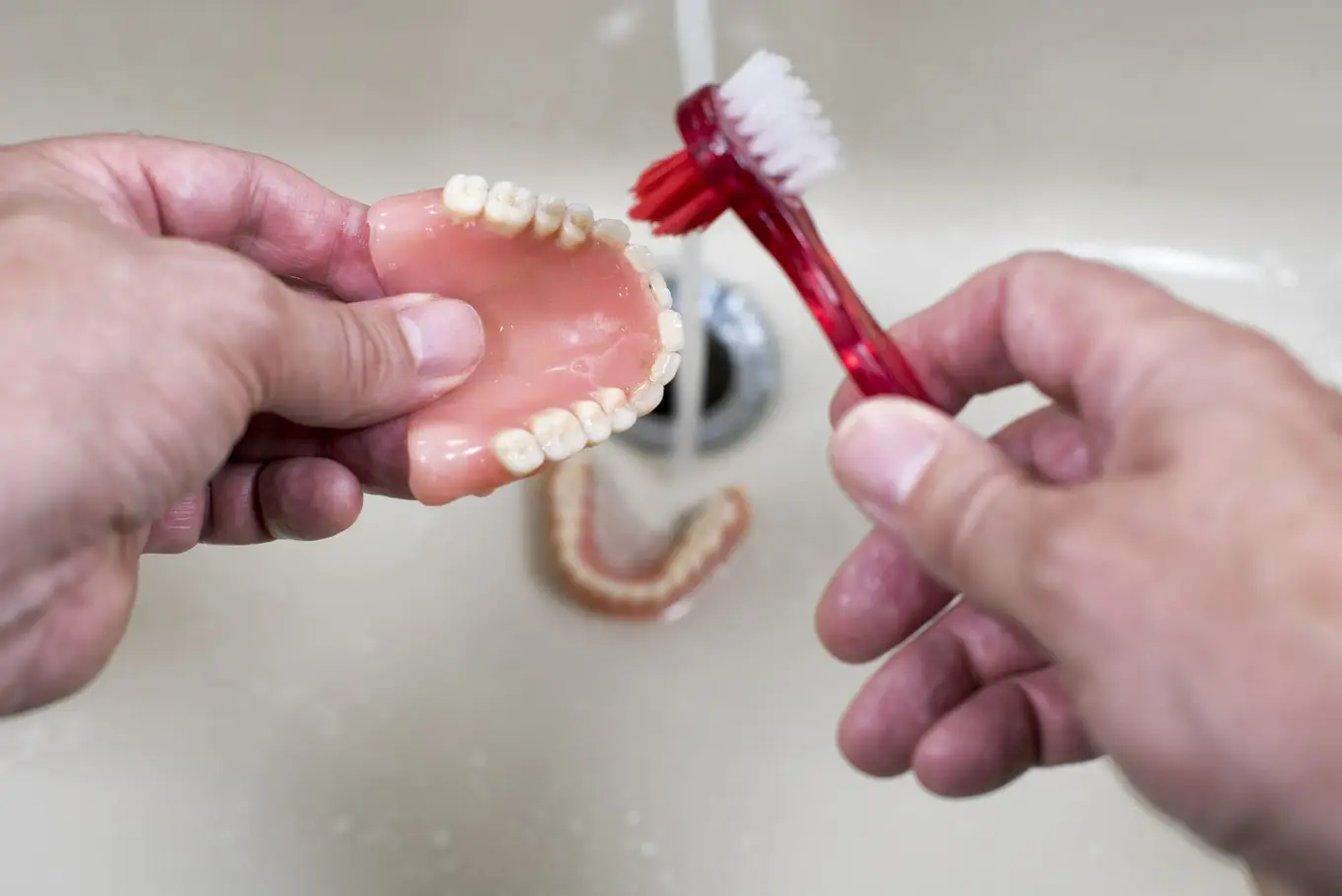
- Removing the denture and rinsing it under lukewarm running water,
- thorough cleaning of all surfaces with a soft brush designed for dentures,
- the use of preparations dedicated to prosthetic restorations rather than ordinary toothpaste,
- thorough rinsing of the denture after cleaning and its safe storage when not in use.
Such a routine keeps hygiene in check and at the same time protects the denture material from damage.
What should you not do with a denture?
Dentures in Lodz is a precision-fit component, so improper use very quickly leads to problems. It is unacceptable use of aggressive cleaning agents, hot water or hard brushes that cause micro-damage to the surface. Equally dangerous are attempts to repair, overtighten or grind the denture yourself. Even minor interference can disrupt its fit and lead to painful pressure points.
Most common patient errors
In daily practice, the most common errors are:
- cleaning of the denture with ordinary abrasive toothpaste,
- the use of hot water, which leads to deformation of the material,
- storing the prosthesis „dry”, without a suitable container,
- ignoring the first signs of discomfort and pain,
- correcting the shape of the prosthesis yourself.
Each of these errors shortens the life of the prosthesis and increases the risk of oral complications.
When does a denture need to be corrected by a prosthodontist?
Dentures are not a permanent solution for life, as the mouth changes over time. Bone atrophy, changes in the shape of the gums and natural ageing processes mean that even a well-fitting denture can cease to fit properly over time. Correction with a prosthodontist is always necessary then, when discomfort, instability or pain occurs. Regular check-ups can detect problems at an early stage and avoid more serious conditions. Denture wearers should consider check-ups as part of prevention rather than as a reaction to advanced symptoms.
Symptoms of poor fitting dentures
An ill-fitting prosthesis gives clear signals that should not be ignored:
- a feeling of pressure or pain when wearing,
- abrasions, redness or erosions of the mucous membrane,
- movement of the denture when speaking or eating,
- biting difficulties and instability,
- deterioration in wearing comfort despite hygiene.
The appearance of such symptoms indicates the need to consult a prosthodontist.
Summary
- The daily care of dentures has a direct impact on wearing comfort and oral health.
- Regular and proper cleaning prevents bacterial build-up and prolongs the life of the denture.
- Improper care habits can lead to damage and pain.
- Changes in the mouth mean that dentures may need periodic adjustment.
- By reacting to the first signs of a poor fit, more serious problems can be avoided.
FAQ
How do I look after my dentures properly?
Dentures require daily cleaning, preferably after every meal, to avoid deposits and odour. It is important to use gentle products and avoid hot water.
Why are regular check-ups with a prosthodontist important?
Regular visits to the prosthodontist help detect denture fit problems at an early stage, preventing discomfort and pain.
What to do when a denture no longer fits?
If a denture becomes unstable or causes pain, a visit to a prosthodontist is necessary to correct it.
 Polski
  English (UK)
  Українська
